Fiberglass Pool Cost: What to Budget in 2026
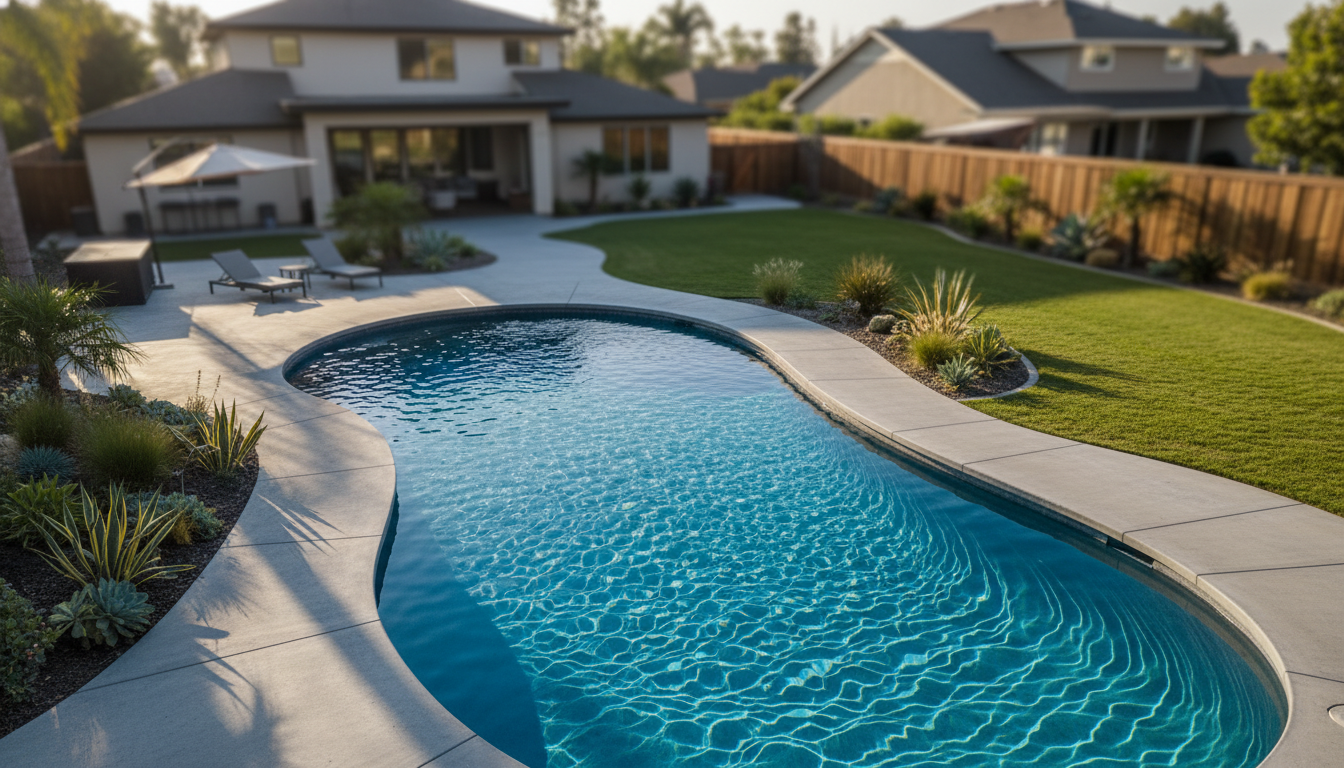
A fiberglass pool runs anywhere from $45,000 to over $100,000 fully installed — a range wide enough to be almost useless without context. The shell itself is only part of the bill. Site prep, decking, water features, and local labor rates can easily double what the manufacturer quotes you.
Here’s how to read a fiberglass pool estimate like someone who’s seen a few.
The Shell Price Is Just the Starting Point
Fiberglass pool shells are factory-molded and shipped to your site, which is why manufacturers can quote a single number. A basic entry-level shell — think 12×24 feet, no tanning ledge, no deep end bench — runs roughly $15,000–$25,000 before it leaves the factory. Mid-size shells with more features land between $25,000 and $40,000. Large or custom-shaped shells push past that.
But the shell is maybe 30–40% of total project cost. The rest breaks down like this:
- Excavation and backfill: $2,000–$8,000 depending on soil type and access
- Plumbing and electrical: $3,000–$7,000
- Pool equipment (pump, filter, heater): $2,500–$8,000+
- Coping and decking: $5,000–$20,000+ (concrete, pavers, or travertine)
- Fill dirt, gravel, and permits: $1,000–$4,000
- Contractor markup and labor: 20–40% on top of materials
A realistic all-in number for a mid-size fiberglass pool in a typical suburban backyard is $55,000–$75,000. In high-cost-of-living areas (coastal California, the Northeast, Hawaii), budget $80,000–$110,000.
What Moves the Price Most
Pool size and shape are the obvious levers. A 12×24 plunge-style pool costs meaningfully less than a 16×40 with a tanning ledge and spa attachment. Manufacturers like Latham, San Juan, and Thursday Pools publish shell sizes and starting prices on their sites — use those as anchors.
Yard conditions are where budgets get wrecked. Rocky soil, poor drainage, high water tables, or limited equipment access all add excavation time and cost. Get a site assessment before signing anything.
Equipment choices vary widely. A variable-speed pump like the Pentair IntelliFlo3 VSF costs more upfront than a single-speed pump but pays back in electricity savings within 2–3 years. A cartridge filter like the Pentair Clean & Clear Plus 320 requires less backwashing than a sand filter. These choices affect both installation cost and ongoing operating cost.
Salt chlorination is often added during install. A salt system like the Hayward AquaRite 900 adds $800–$1,500 to the build but cuts ongoing chemical costs significantly.
Fiberglass vs. Concrete vs. Vinyl: Cost Comparison
Fiberglass typically costs less than gunite/concrete over a 10-year window, even if the upfront numbers look similar.
Concrete pools often start around $60,000–$80,000 installed but require acid washing every 3–5 years, replastering every 10–15 years ($10,000–$20,000), and higher chemical consumption due to the porous surface. They also take 3–6 months to build.
Vinyl liner pools are cheaper upfront — often $35,000–$55,000 — but the liner needs replacing every 7–12 years at $3,000–$5,000 per replacement, and punctures are a real risk.
Fiberglass shells are non-porous, which means lower chemical demand, no replastering, and faster installation (typically 3–6 weeks start to finish). The long-term cost advantage is real, but only if the shell quality is good — cheap offshore shells have documented issues with osmotic blistering.
Hidden Costs Most Quotes Don’t Show
Landscaping restoration: Excavation will tear up your yard. Budget $2,000–$5,000 to restore grass, plants, or hardscaping around the pool area.
Fencing and safety covers: Most municipalities require a compliant fence. An automatic safety cover like a Cover-Pools automatic system runs $8,000–$15,000 installed. Basic mesh safety covers start around $1,500–$3,000.
Heating: A gas heater can add $2,000–$4,000 to the build. A heat pump like the Hayward HeatPro HP21404T costs more upfront but is far cheaper to run in most climates.
Ongoing chemistry: Fiberglass pools are easier to balance than concrete, but you’re still spending $600–$1,200/year on chemicals depending on pool size and climate.
How to Get an Accurate Quote
Get at least three bids from licensed pool builders. Ask each one for a fully itemized quote — shell cost, excavation, equipment, decking, permits, and startup chemicals listed separately. Any contractor who refuses to itemize is someone to avoid.
Ask specifically: What’s not included in this quote? The answer will tell you more than the number itself.
Check reviews on the Pool and Hot Tub Alliance (PHTA) member directory and your state contractor license board. A low bid from an unlicensed contractor is how $65,000 projects become $95,000 disasters.
Bottom line: Budget $55,000–$85,000 for a realistic mid-size fiberglass pool installed, add 15% contingency for site conditions, and prioritize quality equipment over a cheaper shell. The shell lasts 25+ years — the pump and filter will be replaced in 10.
Where to Buy
- Pentair IntelliFlo3 VSF
- Pentair Clean & Clear Plus 320
- Hayward AquaRite 900
- Hayward HeatPro HP21404T
- Cover-Pools automatic pool cover