Hot Tub Chemicals: The Right Order to Add Them
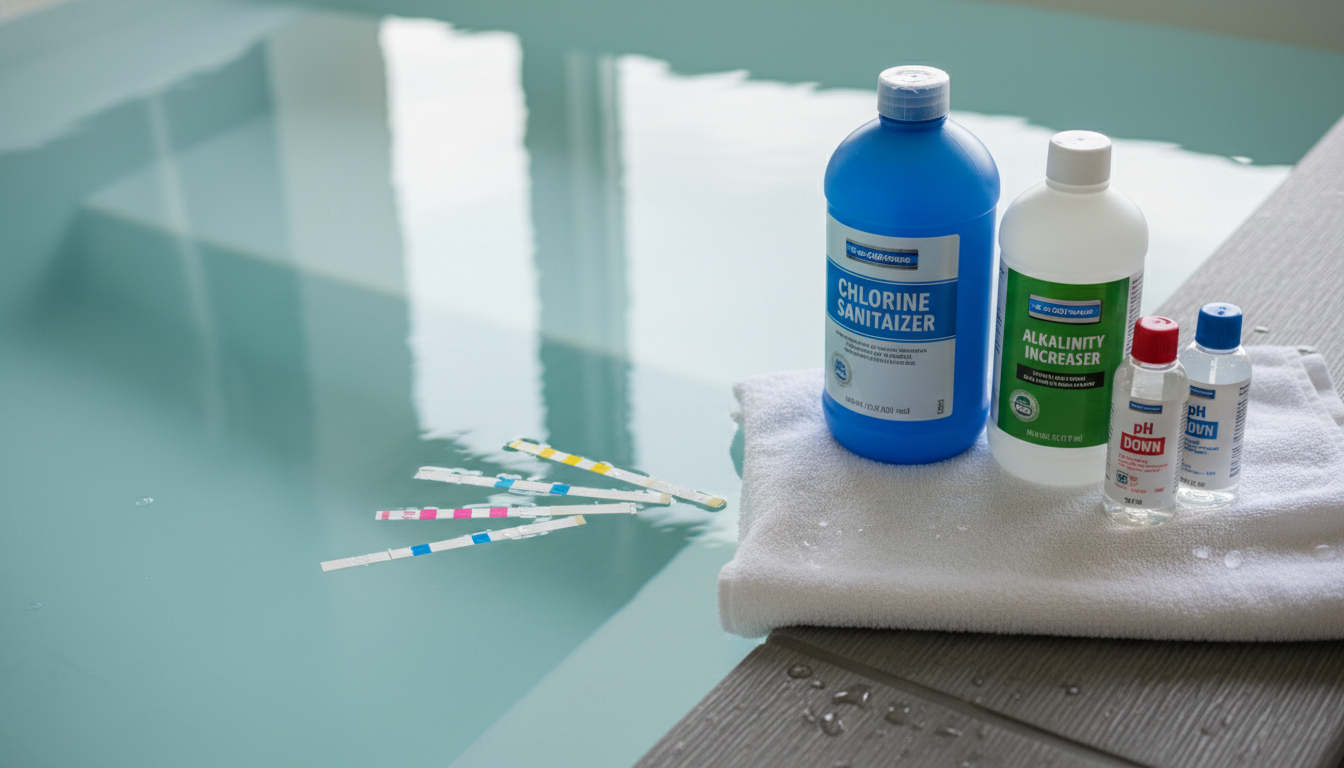
Adding chemicals to a hot tub isn’t just about what you add — it’s about when and in what order. Get it wrong and you risk cloudy water, scale buildup, or chemicals that cancel each other out before they’ve done anything useful.
The correct sequence: balance pH and alkalinity first, then adjust calcium hardness, then sanitize, then add an oxidizer (shock). Each step depends on the one before it.
Why Order Matters
Sanitizers like chlorine and bromine work best within a specific pH range (7.2–7.6). If you dump chlorine into water with a pH of 8.2, you’ve just wasted most of it — it converts to hypochlorite ion, which has a fraction of the sanitizing power. Same principle applies to shock: oxidizers like non-chlorine MPS shock are pH-sensitive.
Alkalinity acts as a pH buffer. Fix it first and your pH adjustments become more predictable and stable. Skip this step and you’ll be chasing pH swings every week.
Step 1: Total Alkalinity (Target: 80–120 ppm)
Test your alkalinity before touching anything else. If it’s low, add sodium bicarbonate (baking soda). If it’s high, add a pH decreaser (sodium bisulfate or muriatic acid) in small doses.
Wait at least 30 minutes with the jets running after adjusting alkalinity before testing again. The water needs to circulate fully.
Products worth using:
- Leisure Time Alkalinity Increaser for raising alkalinity
- Any pH Down product with sodium bisulfate for bringing it down
Step 2: pH (Target: 7.4–7.6)
Once alkalinity is stable, pH usually follows. If it still needs adjustment, add pH Up (sodium carbonate) or pH Down in small amounts — no more than 1 oz per 500 gallons at a time.
Run the jets for 15–20 minutes after each adjustment, then retest. Overadjusting pH in both directions is the most common beginner mistake. Small doses, patience.
Step 3: Calcium Hardness (Target: 150–250 ppm)
Low calcium causes foaming and corrodes acrylic surfaces and equipment over time. High calcium causes scale on the shell, jets, and heater element.
Leisure Time Calcium Booster is a straightforward increaser. Add it slowly with jets running — calcium hardness adjustments can temporarily cloud the water, which clears within a few hours. Wait at least 4 hours (ideally overnight) before adding sanitizer.
If your hardness is too high, the only real fix is a partial drain and refill with softer water.
Step 4: Sanitizer (Chlorine or Bromine)
Now that your water balance is correct, sanitizer will actually work. This is the step most people do first — and that’s why they burn through product so quickly.
Chlorine (dichlor granules): Add to the water directly with jets running. Maintain 3–5 ppm free chlorine. Leisure Time Chlorinating Granules dissolve fast and work well in hot tubs.
Bromine: If you’re running a bromine system, establish your bromine bank first with sodium bromide, then activate it with a small dose of non-chlorine shock. Maintain 3–5 ppm bromine.
Never mix chlorine and bromine products. Pick one system and stick with it.
Step 5: Shock (Oxidizer)
Shock is not a sanitizer — it’s an oxidizer that burns off combined chloramines, organic waste, and other contaminants that make water look dull or smell off.
Use non-chlorine shock (Leisure Time Renew) weekly as maintenance. Use dichlor shock after heavy use, after a water change, or when the water looks off. Add shock last, after all other chemicals are balanced and circulated.
Wait at least 15 minutes after adding non-chlorine shock before using the tub. With chlorine shock, wait until levels drop below 5 ppm.
Timing Summary
The biggest timing mistakes: adding calcium hardness and then immediately adding sanitizer (causes cloudiness and waste), or adding shock right after pH adjuster (reduces shock effectiveness).
Follow this rough schedule:
- Adjust alkalinity → wait 30 min
- Adjust pH → wait 20 min
- Adjust calcium hardness → wait 4 hours
- Add sanitizer → wait 15–30 min
- Add shock → wait 15 min minimum before soaking
Weekly maintenance usually only requires steps 4 and 5, assuming your water balance is stable. Full rebalancing happens after a water change (every 3–4 months) or after heavy use throws your numbers off.
Bottom line: Balance before you sanitize, sanitize before you shock. That sequence protects your equipment, keeps the water clear, and makes every chemical you buy go further.
Where to buy
- Leisure Time Alkalinity Increaser
- Leisure Time Calcium Booster
- Leisure Time Chlorinating Granules
- Leisure Time Renew Non-Chlorine Shock