Bromine vs Chlorine for Hot Tubs: Which Should You Use?
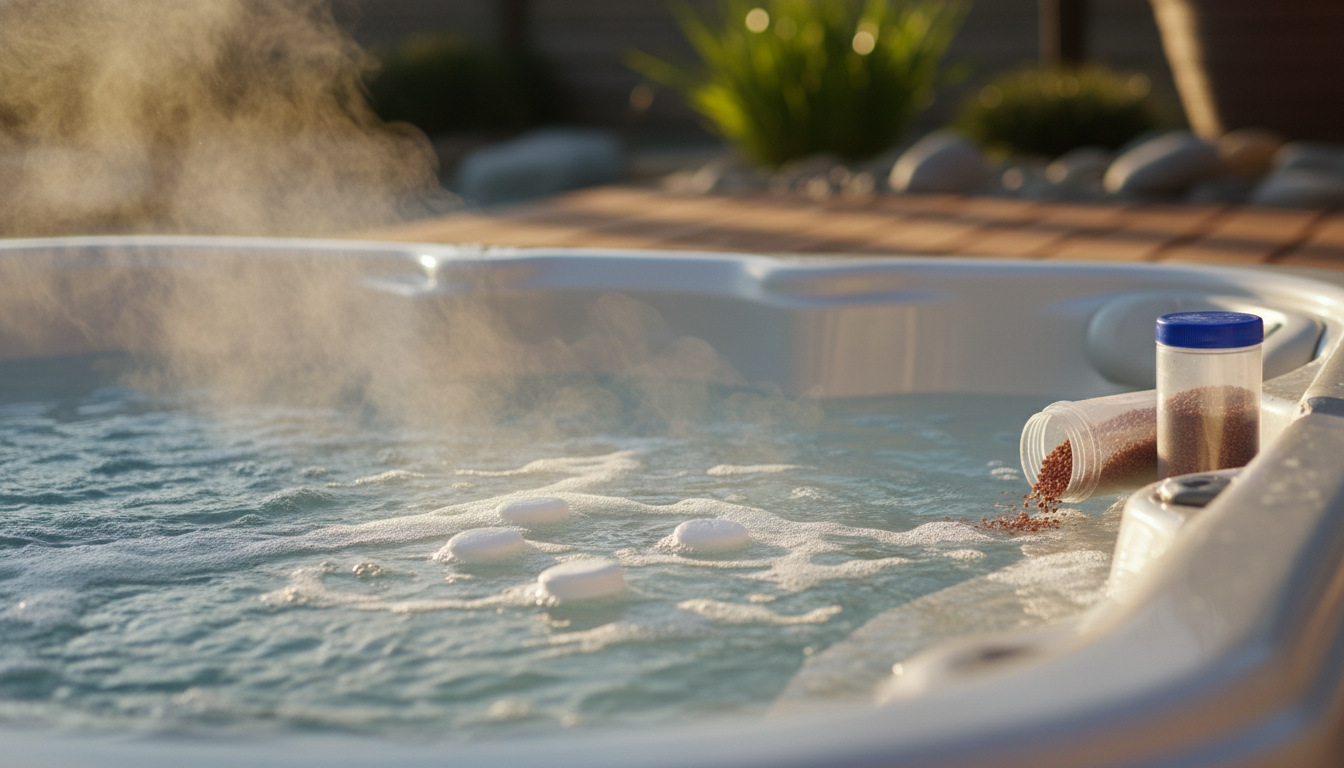
Most hot tub owners pick a sanitizer based on what the store had in stock. That’s a fine way to end up with skin irritation or a tub that’s constantly out of balance. Bromine and chlorine are both effective disinfectants, but they perform differently in the conditions hot tubs actually create — high heat, heavy bather loads, tight pH windows. Here’s how to pick the right one before you buy.
How Each Sanitizer Works
Chlorine kills bacteria and oxidizes contaminants through free available chlorine (FAC). It works fast, which is useful in pools where you need rapid sanitization over a large volume of water. The problem in a hot tub is that heat and turbulence accelerate chlorine off-gassing. You lose active sanitizer faster than you can add it, and combined chloramines — the compounds responsible for that sharp chemical smell — form quickly when chlorine reacts with ammonia from sweat and body oils.
Bromine works differently. It forms bromine-based compounds (bromamines) when it reacts with organic contaminants, and unlike chloramines, bromamines remain active sanitizers. Bromine also stays effective at higher pH levels — up to about 8.0 — which matters because hot tub pH naturally creeps upward. Chlorine’s efficacy drops sharply above pH 7.8.
The Heat Factor
Hot tub water sits between 100°F and 104°F. That’s not incidental — it fundamentally changes how sanitizers behave. Chlorine degrades faster at these temperatures, meaning you need to test and dose more frequently to maintain the 3–5 ppm target range. If you use the tub daily or leave it unattended for a few days, maintaining consistent chlorine levels is genuinely difficult.
Bromine is more stable at high temperatures. It stays active longer between doses and handles the thermal stress better. This is the single biggest reason bromine dominates hot tub use commercially and in most spa-care manuals. The tradeoff is that bromine can’t be stabilized with cyanuric acid the way chlorine can — but in a covered hot tub that doesn’t see direct sun exposure, that’s rarely a meaningful concern.
Practical Differences in Maintenance
Chlorine in a hot tub typically means:
- Granular sodium dichloro-s-triazinetriol (dichlor) as the primary sanitizer
- Dosing after every soak
- Testing every 2–3 days minimum
- Shock oxidation with non-chlorine shock or a separate chlorine shock
Bromine usually means:
- A brominator (a floating or inline feeder) loaded with Leisure Time Brom-Tabs
- Establishing a bromine bank with sodium bromide first, then activating with an oxidizer
- Testing every 3–4 days, targeting 3–5 ppm
- Less frequent intervention overall
The bromine bank concept is worth understanding. Sodium bromide itself doesn’t sanitize — it sits in the water as a reserve. When you add an oxidizer (like non-chlorine shock), it converts bromide ions into active hypobromous acid. This means even after bromine levels drop, re-shocking the water quickly regenerates active sanitizer. Chlorine doesn’t work this way; once it’s gone, it’s gone.
Skin Sensitivity and Odor
Chlorine at high concentrations and in chloramine form irritates eyes and skin. If bathers complain of red eyes or itchy skin after hot tub sessions, chloramines are usually the culprit — not the chlorine level itself. Shocking the tub and improving ventilation usually resolves it, but it’s a recurring management issue.
Bromine is gentler on skin and produces less noticeable odor at normal use levels. People with chlorine sensitivities often tolerate bromine well. The caveat: some users do experience sensitivity to bromine, and brominated water can bleach swimwear and irritate mucous membranes if the level runs too high. Keep it under 5 ppm.
One underrated option for chlorine users who have sensitivity issues: SpaGuard Enhanced Shock as a regular oxidizer can help destroy chloramines and reduce irritation without overloading the sanitizer level.
Cost Comparison
Bromine typically costs more per pound than chlorine. A 2 lb container of SpaGuard Brominating Tablets runs roughly $20–$30, and you’ll go through it at a moderate pace depending on bather load. Dichlor granules are cheaper upfront, but the higher dosing frequency and additional shock requirements can narrow that gap quickly.
Factor in the cost of a floating bromine dispenser if you don’t already have one — they run $10–$20 and are reusable indefinitely.
When to Choose Each
Choose bromine if:
- The tub is used 3+ times per week
- You or bathers have chlorine sensitivity
- You want lower maintenance between sessions
- The hot tub is covered and indoors or shaded
Choose chlorine if:
- You’re managing costs tightly and don’t mind more frequent testing
- You’re already using a salt chlorine generator compatible with the tub
- You have access to a reliable testing routine and dose consistently
Salt systems like the Freshwater Salt System by Hot Spring generate chlorine on-demand and reduce the manual dosing burden significantly — worth considering if you’re buying a new tub or upgrading.
Bottom line: For most hot tubs, most of the time, bromine is the better-fit sanitizer. It handles heat and pH drift better, requires fewer emergency interventions, and produces less irritating byproducts. Chlorine makes sense if you’re cost-constrained or running a salt system.
Where to Buy
- Leisure Time Brom-Tabs
- SpaGuard Brominating Tablets
- SpaGuard Enhanced Shock
- Floating bromine dispenser
- Freshwater Salt System by Hot Spring